
For as long as humans have built shelters, we have sought to protect them from the elements. The exterior wall cladding — the outer skin of a building — has evolved dramatically over millennia. What began as mud and thatch has progressed through stone, brick, wood, concrete, glass, and now advanced composite systems like metal carved panels.
Understanding this evolution isn’t just an architectural history lesson. It reveals why modern cladding solutions have become so efficient, durable, and visually versatile — and why products like metal carved panels are rapidly replacing traditional materials in both new construction and renovation.
This article traces the 10,000‑year journey of exterior wall cladding, from prehistoric shelters to today’s high‑performance insulated panels.
Stage 1: Natural Materials (10,000 BCE – 2000 BCE)
The earliest buildings used whatever was locally available: mud, clay, stone, wood, animal hides, and thatch.
- Mud and wattle‑and‑daub: Sticks woven together and plastered with clay or dung. Provided basic weather protection but eroded quickly.
- Stone: Permanent but labor‑intensive. Only the wealthiest or most communal societies could build entire structures from cut stone.
- Wood: Abundant in forested regions. Offered decent insulation but rotted, burned, and attracted pests.
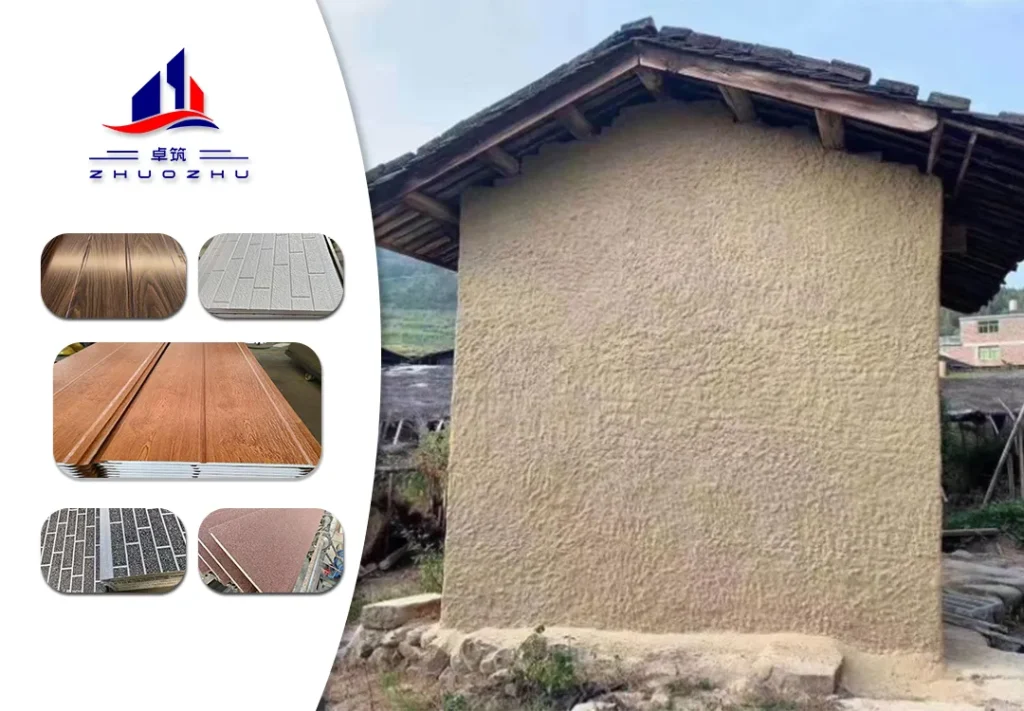
Limitations: No standardization, poor durability, high maintenance. Cladding was not a “system” — it was simply the wall itself.
Stage 2: Brick and Masonry Dominance (2000 BCE – 1800 CE)
The invention of fired brick and organized masonry changed construction forever.
- Sun‑dried and kiln‑fired brick: Uniform shapes allowed for stronger, more predictable walls. The Romans perfected brick and concrete, building structures that still stand today.
- Stone veneer: Thin stone slabs applied over rubble cores became common for prestigious buildings — temples, cathedrals, palaces.
- Lime mortars and plasters: Enabled smoother, more weather‑resistant finishes.
Advancements: Durability improved dramatically. Fire resistance became a major advantage over wood. A brick or stone building could last centuries.
Drawbacks: Extremely heavy — requiring massive foundations. Labor‑intensive, slow construction. Little to no thermal insulation without additional interior layers.
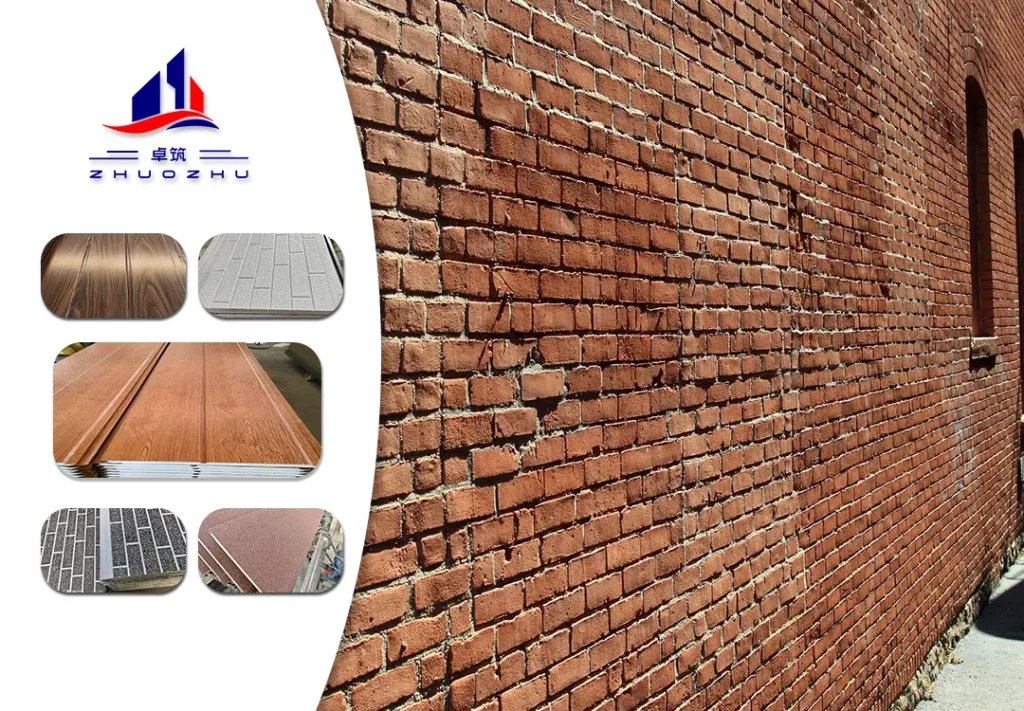
By the 18th century, brick had become the default exterior cladding in much of Europe and its colonies. The look became culturally ingrained — a bias that persists in markets like the UK and Australia today.
Stage 3: Industrial Revolution – Metal and Glass (1800 – 1950)
The Industrial Revolution introduced mass‑produced materials and new structural possibilities.
- Cast iron and steel frames: Allowed buildings to rise taller. The outer walls no longer had to bear the full structural load. This separation — between structure and cladding — was revolutionary.
- Terracotta and glazed tiles: Factory‑made ceramic cladding offered color and moisture protection, popular in late‑19th‑century American skyscrapers.
- Glass curtain walls: Pioneered in the 20th century (e.g., Bauhaus, Lever House). Glass became a legitimate cladding material, but offered poor insulation.
- Early metal panels: Corrugated galvanized steel and aluminum sheets appeared in agricultural and industrial buildings. They were cheap, light, and fast to install — but ugly, prone to corrosion, and offered no thermal break.
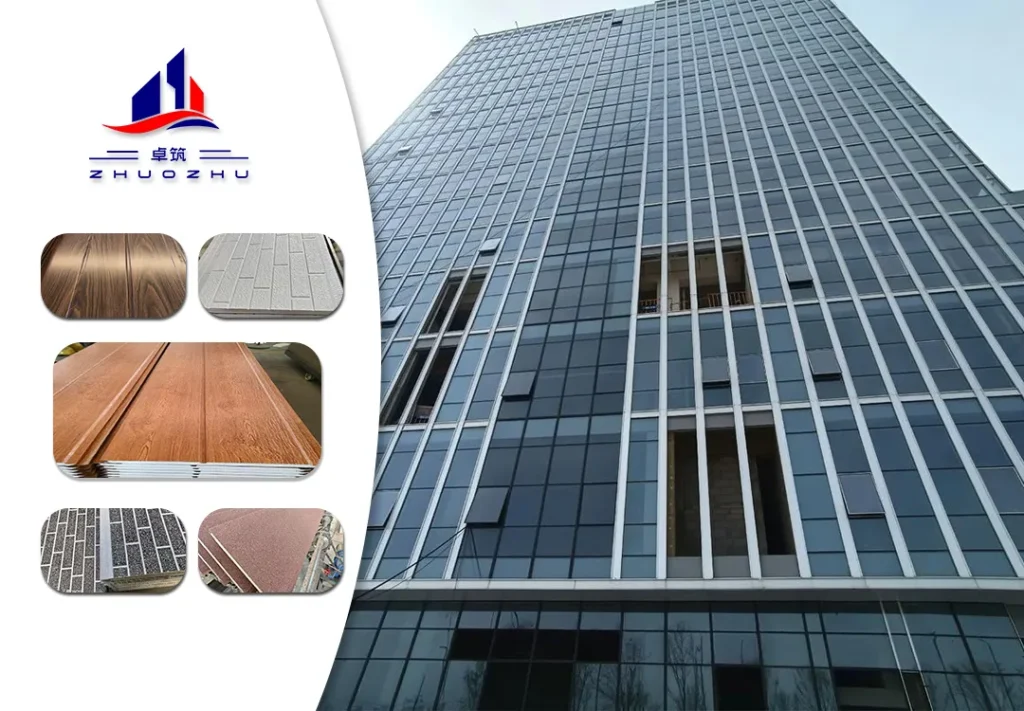
Significance: Cladding became an applied skin, not part of the structure. This opened the door for future lightweight, high‑performance systems.
Drawbacks: Early metal cladding had terrible aesthetics and thermal performance. Glass caused massive energy losses. Terracotta was fragile and expensive.
Stage 4: The Age of Synthetics and Insulation (1950 – 1990)
Post‑WWII chemistry created entirely new cladding materials.
- Vinyl (PVC) siding: Cheap, lightweight, and low‑maintenance. Exploded in popularity in North America. But vinyl fades, cracks in cold weather, melts in fires, and offers negligible insulation.
- Fiber cement siding: A more durable alternative to vinyl. Resists rot and insects, holds paint well. But heavy, brittle, requires special tools, and needs repainting every 10–15 years.
- Aluminum siding: Lightweight and rust‑proof. But dents easily and looks “industrial” — fell out of favor for residential use.
- External insulation finishing systems (EIFS): Foam insulation board covered with a synthetic stucco‑like coating. Excellent thermal performance but vulnerable to moisture trapping and impact damage.
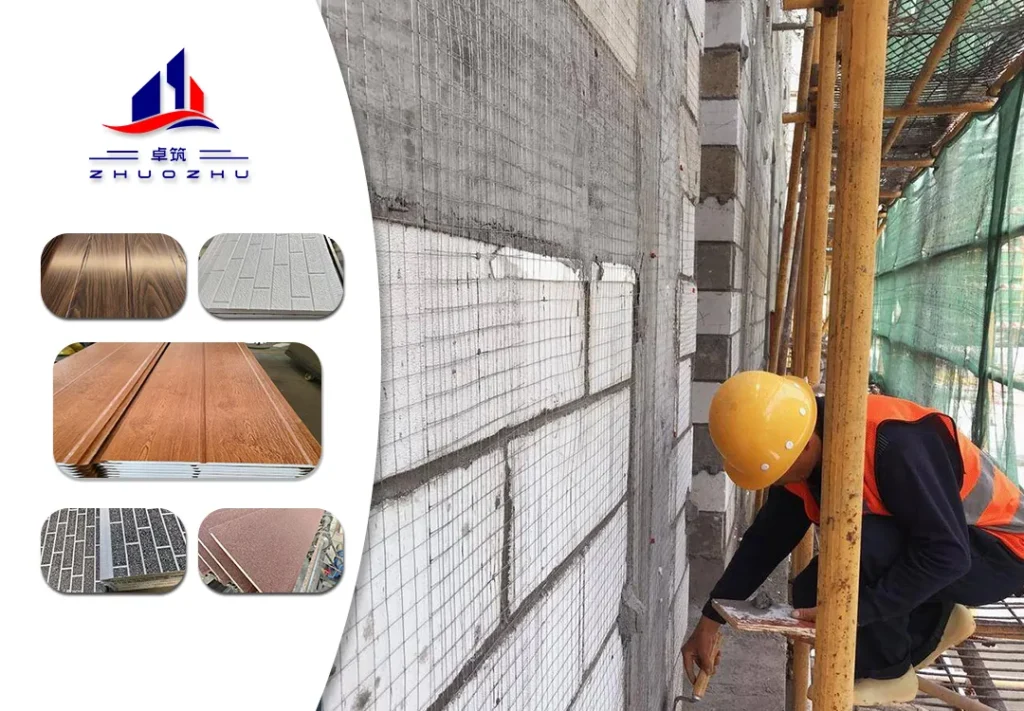
Key shift: For the first time, insulation became a deliberate part of the cladding assembly, not an afterthought. Builders realized that energy efficiency could be a selling point.
Drawbacks: No single product combined durability, aesthetics, insulation, and fast installation. Each had trade‑offs: vinyl looked cheap, fiber cement was heavy, EIFS was fragile.
Stage 5: The Prefab Revolution – Composite Panels (1990 – 2015)
The late 20th and early 21st centuries saw the rise of engineered composite cladding.
- Aluminum composite panels (ACP): Two thin aluminum sheets bonded to a polyethylene core. Lightweight, flat, and available in many colors. Became standard for commercial buildings. But the polyethylene core is flammable — leading to tragic fires (e.g., Grenfell Tower, 2017).
- Metal composite material (MCM) panels with fire‑retardant cores addressed the safety issue.
- Structural insulated panels (SIPs) for entire wall assemblies, but more common in new construction than retrofits.
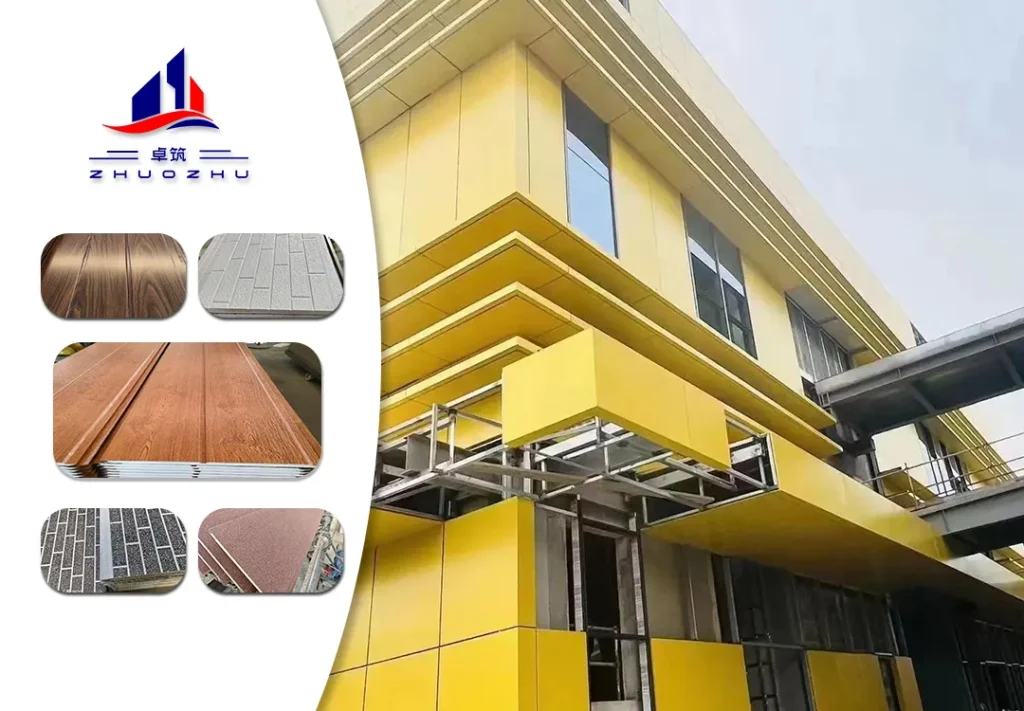
Advancement: Factory‑laminated panels offered consistent quality, faster installation, and new design possibilities. Cladding became a system, not a site‑assembled puzzle.
Remaining gap: Most composite panels had plain metal or painted finishes. They didn’t look like wood, brick, or stone — limiting their appeal in residential and high‑end commercial markets.
Stage 6: The Modern Era – Metal Carved Panels (2015 – Present)
Today’s exterior cladding market demands a product that does everything:
- Looks like natural materials (wood, brick, stone, granite)
- Provides continuous insulation
- Installs quickly with unskilled labor
- Weighs very little
- Resists fire, moisture, insects, and UV
- Requires zero maintenance
- Costs less than the real thing over the building’s lifetime
That product exists: metal carved panels.
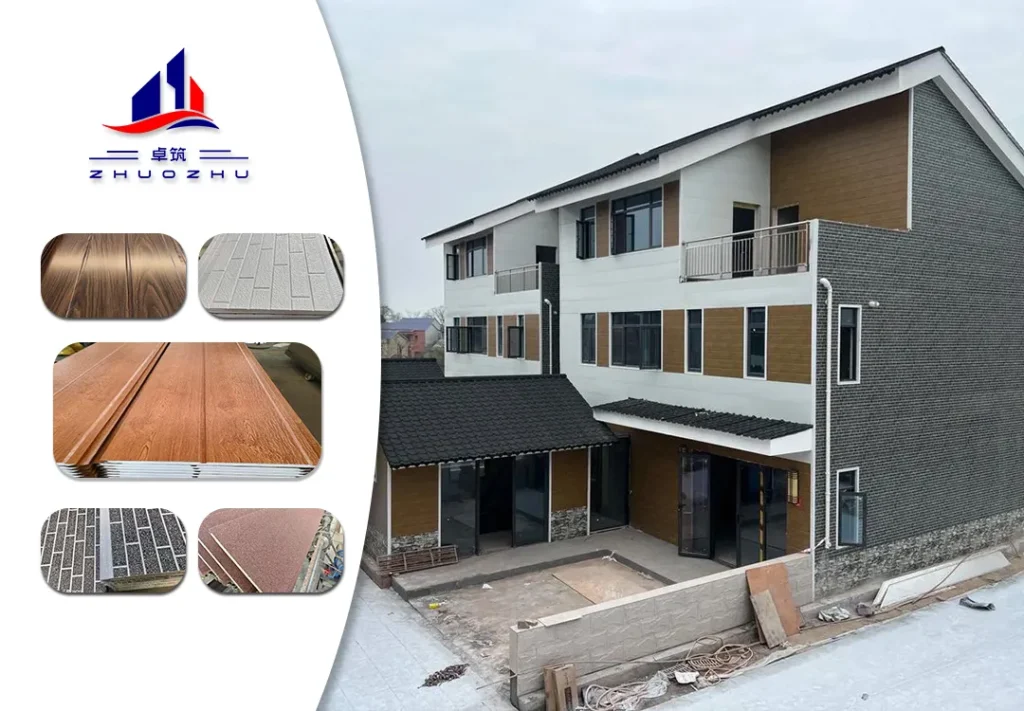
Metal carved panels are three‑layer composite panels consisting of:
- An embossed or printed metal surface (steel or aluminum) that mimics wood grain, brick, stone, granite, or custom patterns.
- A rigid polyurethane (PU) foam core that provides continuous thermal insulation — equivalent to many times the thickness of traditional walls.
- An aluminum foil backing that blocks moisture and reflects radiant heat.
These panels install using a dry‑joint, modular system. No mortar, no curing, no weather delays. A standard siding crew can install them up to twice as fast as traditional masonry or wood siding.
Why Metal Carved Panels Represent the Peak of Cladding Evolution
| Requirement | Traditional Solutions | Metal Carved Panels |
|---|---|---|
| Realistic wood/brick/stone appearance | Real materials (high cost, heavy, slow) | Embossed or printed surface (realistic, lightweight) |
| Thermal insulation | Separate layer needed | Built‑in PU core |
| Fast installation | Weeks (masonry) or days (vinyl/wood) | Days (modular dry‑joint) |
| Low maintenance | Sealing, painting, repairs | None |
| Lightweight | Very heavy (stone, brick) or moderate (wood) | Very lightweight |
| Fire resistance | Good (brick/stone) or poor (wood/vinyl) | Excellent (metal + fire‑retardant core) |
| Consistent color | Natural variation (can be problematic) | Perfect batch‑to‑batch consistency |
| Suitable for renovation | Often requires structural reinforcement | Installs over existing walls |
Surface Patterns That Changed the Game
Early metal panels were ugly — plain gray or painted in basic colors. Metal carved panels changed that by offering:
- Wood grain – For residential warmth without maintenance
- Brick pattern – For brick‑loving markets (UK, Australia) without masons
- Stone coated – Real stone granules for luxury texture
- Granite pattern – Commercial prestige for banks and retail
- Custom prints – Branded or unique architectural statements
These patterns mean that metal carved panels are no longer a compromise. They are often the preferred choice — even when budget allows for real materials — because they offer superior long‑term value.
Where Is Cladding Headed Next? (The Near Future)
The evolution is not over. Future cladding will likely include:
- Integrated solar panels – Cladding that generates electricity
- Self‑cleaning coatings – Photocatalytic surfaces that break down dirt
- Dynamic exteriors – Color‑changing or ventilation‑adjusting panels
- Fully circular systems – Panels designed for disassembly and reuse
Metal carved panels are already compatible with many of these innovations. Their composite structure can accommodate thin‑film solar, advanced coatings, and recyclable materials.
Why This Evolution Matters for Contractors and Distributors
Understanding cladding history helps you sell better.
- Older homeowners remember wood rot and brick mortar failure. Sell them on metal carved panels as the solution to problems they’ve lived with.
- Younger architects grew up with vinyl and EIFS — they know the limitations. Show them how metal carved panels deliver aesthetics without performance trade‑offs.
- Developers care about speed and consistency. The evolution from slow, heavy, variable materials to fast, lightweight, uniform panels is exactly their language.
When you position metal carved panels as the logical endpoint of 10,000 years of cladding improvement — not just another new product — your credibility rises.
Conclusion: The Cladding Journey Has Reached Its Most Advanced Stage
From mud to metal, from structural walls to lightweight skins, from no insulation to built‑in polyurethane cores — exterior wall cladding has come an astonishing distance.
Today’s metal carved panels represent the culmination of that journey:
- Beautiful (wood, brick, stone, granite patterns)
- Protective (fire, water, insects, UV)
- Insulating (continuous PU foam)
- Fast (dry‑joint modular installation)
- Lightweight (fits any structure)
- Sustainable (recyclable, low maintenance)
The next time you specify or sell exterior cladding, remember: you’re not just picking a finish. You’re choosing a technology that has evolved for ten millennia to do one job better than ever before.
Metal carved panels are that technology.
Ready to Experience the Latest Stage of Cladding Evolution?
Contact our team to see samples of wood grain, brick pattern, stone coated, and granite pattern metal carved panels. Compare them to traditional materials. Feel the texture. Check the weight. Run the numbers on installation time and lifetime maintenance.
See for yourself why metal carved panels are the future — and the past — of building exterior wall cladding.