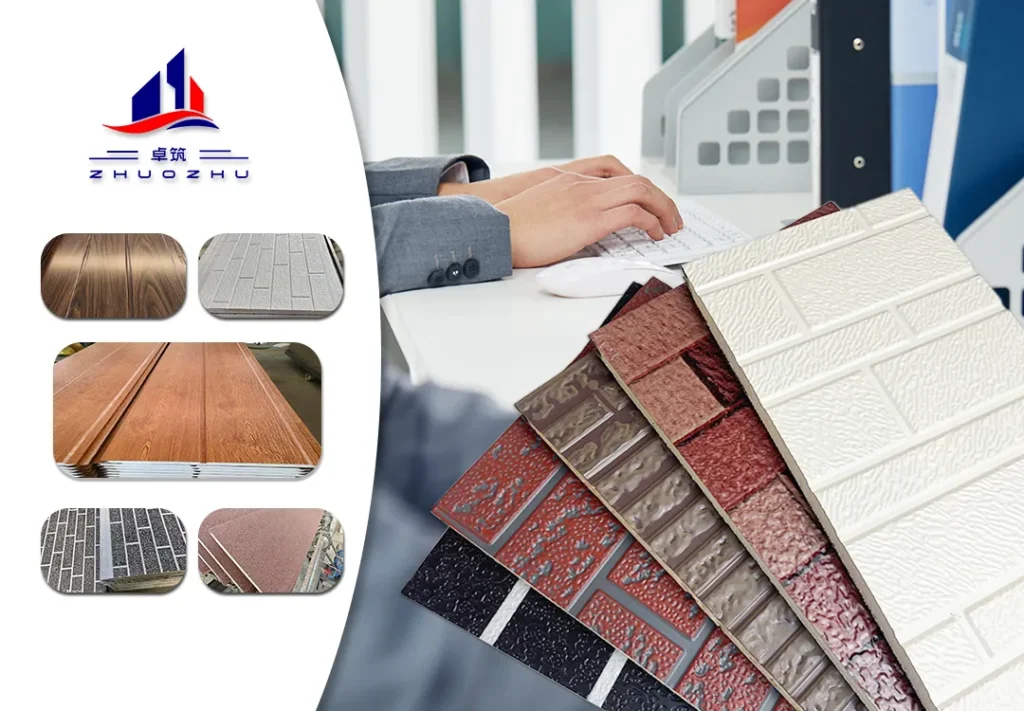
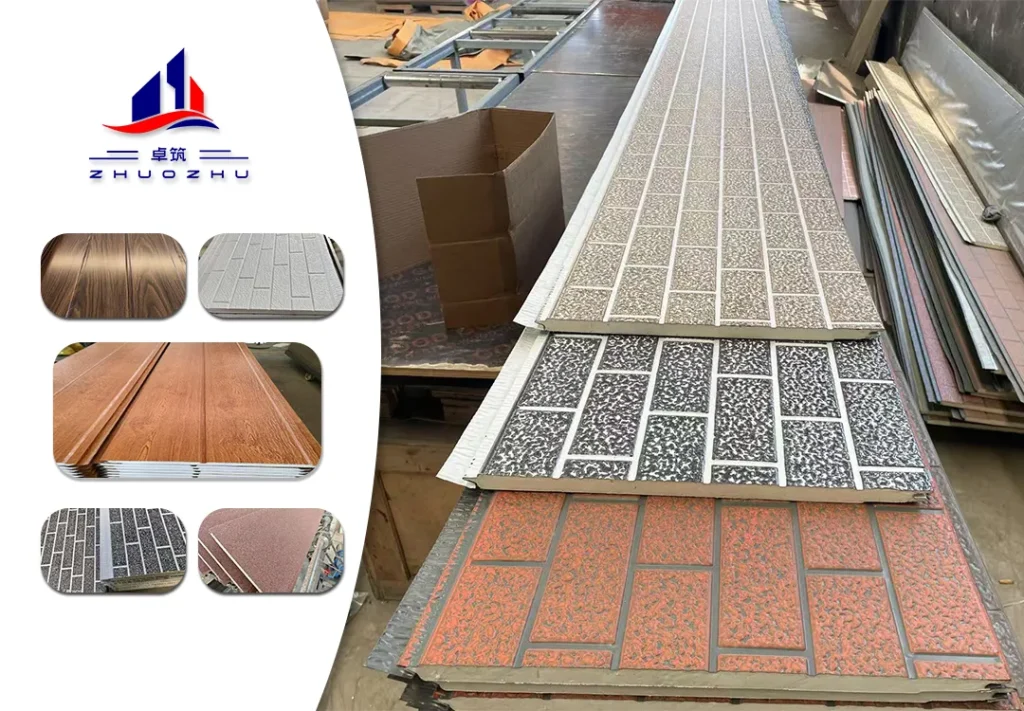
Not all exterior cladding is created equal. And for distributors and contractors serving the premium segment of the market — luxury villas, high-end commercial buildings, and design-driven residential projects — standard finishes like smooth metal or printed patterns often fall short.
That’s where stone coated metal carved panels come in.
Unlike printed or embossed imitations, these panels feature real stone granules bonded to the metal surface with high-strength adhesive. The result is an exterior cladding product that looks, feels, and performs like natural stone — but installs like lightweight metal panels.
This article explains why stone coated metal siding panels are the go-to choice for high-end projects, how they differ from other decorative finishes, and why adding them to your product line can unlock premium pricing and healthier margins.
What Are Stone Coated Metal Carved Panels?
Stone coated metal carved panels are a specialized variant of the broader metal carved panels category. Like other metal carved panels, they feature a three-layer construction:
-
Metal surface layer (zinc-coated steel or aluminum)
-
Polyurethane foam core (for insulation)
-
Aluminum foil backing (for moisture protection)
The difference lies in the surface finish. Instead of embossed patterns or printed designs, stone coated metal insulation panels have real stone granules — typically natural basalt, granite, or marble chips — permanently bonded to the metal using industrial-grade adhesive.
This creates a textured, multi-dimensional surface that no printed or embossed product can replicate.
Stone Coated vs. Other Metal Carved Panels: A Clear Differentiation
If you already stock wood grain or brick pattern products, here’s how stone coated fits into your lineup as a premium-tier offering.
For distributors, stone coated products represent your highest-margin opportunity. For contractors, they allow you to bid on luxury projects that demand something truly special.
How Stone Granules Are Applied: The Manufacturing Process
Understanding the manufacturing process helps you explain the value to customers.
-
Base metal preparation – The metal sheet is cleaned and primed for adhesion.
-
Adhesive application – A high-strength, weather-resistant bonding agent is applied evenly across the metal surface.
-
Stone granule application – Natural stone chips (graded for consistent size) are applied over the adhesive, typically through electrostatic or gravity-fed systems.
-
Curing – The panel passes through a curing oven to set the adhesive permanently.
-
Clear coating (optional) – Some manufacturers apply a transparent protective topcoat for additional UV and moisture resistance.
The result is a decorative exterior wall panel that carries real stone on its face — not a print, not an embossing, but actual rock.
8 Unique Selling Points of Stone Coated Metal Carved Panels
1. Unmatched Texture and Realism
Printed and embossed products look good from a distance. Stone coated products look good up close. When a homeowner or building visitor runs their hand across the wall, they feel real stone granules. That tactile experience is impossible to fake.
For luxury projects where every detail matters, this level of realism justifies premium pricing.
2. Authentic Natural Color Variation
Real stone granules come in varied shades — no two granules are identical. This creates subtle, natural color variation across the panel surface. Unlike printed patterns that repeat every few feet, stone coated panels offer organic, non-repeating visual interest.
Architects and designers specifically request this characteristic. It’s what separates a “man-made” look from a “natural” one.
3. Premium Positioning = Higher Margins
Because stone coated metal carved panels are objectively more expensive to manufacture than printed or embossed products, they command higher prices in the market. But the cost increase is modest compared to the perceived value increase.
End customers see real stone. They associate it with quality, permanence, and luxury. That perception allows you to price at a level that delivers significantly better margins than standard metal carved panels.
For distributors, this means higher dollar value per order. For contractors, it means larger project bids.
4. Same Lightweight, Fast-Install Advantages
Despite the real stone surface, stone coated metal insulation panels remain lightweight. The stone granules add minimal weight compared to the base metal and foam core.
This means:
-
Same fast, dry-joint installation as other metal carved panels
-
No structural reinforcement needed (unlike real stone veneer)
-
Lower shipping costs than natural stone products
Your crew doesn’t need new training. Your logistics don’t change. You simply offer a premium product through your existing system.
5. Far Lighter Than Real Stone Veneer
Real stone veneer — even thin-cut — is heavy. A square meter of natural stone veneer can weigh 30–50 kg or more. That often requires reinforced walls, additional foundation work, and specialized lifting equipment.
Stone coated metal siding panels weigh a fraction of that. A single panel weighs roughly the same as any other decorative exterior wall panel of the same size. One person can carry multiple panels. No crane needed. No structural engineering required.
6. Excellent Weather and UV Resistance
Natural stone is inherently weather-resistant. The stone granules on these panels are no exception. They won’t fade under UV exposure. They won’t degrade from rain, snow, or salt spray.
The adhesive that bonds the stone to the metal is formulated for outdoor exposure. High-quality stone coated metal carved panels carry warranties of 20 years or more on the stone adhesion.
For customers in harsh climates — coastal areas, high-UV regions, freeze-thaw zones — this durability is a major selling point.
7. Fire Resistance (Better Than Wood or Plastic-Based Products)
Stone doesn’t burn. The metal backing doesn’t burn. The polyurethane core can be manufactured with fire-retardant additives.
Compared to wood siding, vinyl, or even some printed metal panels with organic coatings, stone coated metal insulation panels offer superior fire performance. This is particularly valuable in wildfire-prone regions or commercial applications with strict fire codes.
8. Low Maintenance — No Sealing Required
Real stone veneer often requires periodic sealing to prevent moisture intrusion or efflorescence. Stone coated metal carved panels do not. The stone granules are bonded to a waterproof metal backing. Water cannot penetrate to the substrate.
Homeowners get the stone look without the annual sealing, cleaning, or repair work that natural stone demands.
Stone Coated vs. Real Stone Veneer: The Comparison Your Customers Need
When a luxury home builder or architect asks “Why not just use real stone?”, here’s your answer.
Real stone veneer has its place. But for projects where speed, weight, and cost matter — which is most projects — stone coated metal carved panels are the smarter choice.
Target Customer Profiles: Who Buys Stone Coated Products?
As a distributor or contractor, focus your stone coated sales efforts on these premium segments.
Segment 1: Luxury Home Builders
-
Need: Distinctive, high-end exterior finishes that justify premium home prices
-
Pain: Real stone is slow and heavy; standard siding looks too common
-
Your pitch: “Give your buyers real stone texture without the schedule delays or structural costs. Your homes will stand out from every other build in the neighborhood.”
Segment 2: High-End Renovation Contractors
-
Need: Products that transform dated exteriors into luxury facades
-
Pain: Old homes can’t support real stone weight
-
Your pitch: “Stone look on any wall. No reinforcement needed. Installs right over existing siding.”
Segment 3: Hotel and Resort Developers
-
Need: Durable, impressive exteriors that create a luxury first impression
-
Pain: Real stone is too slow for construction deadlines
-
Your pitch: “Fast installation means earlier opening. Real stone texture means guests see luxury. And minimal maintenance means lower operating costs.”
Segment 4: Architects Specifying for High-Profile Projects
-
Need: Natural materials that meet budget and schedule
-
Pain: Real stone often gets value-engineered out
-
Your pitch: “Keep the stone aesthetic in your design. These panels meet your vision without blowing the budget or extending the timeline.”
Segment 5: Commercial Property Owners (Banks, Corporate Offices, Medical Buildings)
-
Need: Prestigious exteriors that convey stability and quality
-
Pain: Real stone installation disrupts business operations
-
Your pitch: “Fast, dry installation means less disruption to your tenants or customers. And the stone look says ‘established, trustworthy, permanent.’”
Available Stone Types and Colors
Stone coated metal carved panels are available in a wide range of natural stone varieties. Popular options include:
For distributors, stocking 3–5 of the most popular stone types for your region is typically sufficient. Most luxury buyers are looking for basalt, granite, or marble finishes.
How to Position Stone Coated Against Other Premium Materials
Your customers may compare stone coated metal carved panels to:
Real stone veneer – Heavier, slower, more expensive to install. Stone coated wins on speed, weight, and cost.
Manufactured stone (cultured stone) – Lighter than real stone but still requires mortar and skilled labor. Stone coated installs faster with standard siding crews.
High-end fiber cement – Can mimic stone but lacks real texture. Stone coated wins on authenticity.
Thin brick / thin stone panels – Still require mortar and masonry skills. Stone coated wins on installation simplicity.
Wood grain or brick pattern metal panels – These are mid-range products. Stone coated is your premium upgrade path.
Common Objections and How to Handle Them
Objection: “Will the stone granules fall off over time?”
Response: “High-quality stone coated metal insulation panels use industrial-grade adhesive and a curing process that bonds the stone permanently. Reputable manufacturers offer long-term warranties against stone detachment.”
Objection: “It looks good, but is it as durable as real stone?”
Response: “The stone granules themselves are real stone — as durable as any rock. The metal backing is corrosion-resistant. The system is actually more impact-resistant than thin stone veneer, which can crack.”
Objection: “Can I get matching trim pieces?”
Response: “Yes. Same as other metal carved panels, stone coated products have matching corner trims, window flashings, and starter strips for a complete system.”
Objection: “Isn’t this just painted metal with sand on it?”
Response: “No. These are real stone granules — not sand or colored coatings. The size, shape, and natural variation are completely different from simple textured paint.”
Objection: “My customers won’t pay extra for stone.”
Response: “They will for the right project. Stone coated is for luxury segments — not every job. But for the projects where clients want something truly premium, this product lets you say ‘yes’ instead of ‘we don’t carry that.’”
Inventory and Logistics for Distributors
If you’re adding stone coated metal carved panels to your warehouse, here’s what to know.
Premium positioning: Stock lower quantities than your wood grain or brick pattern lines, but expect higher dollar value per order.
Popular stone types by region:
-
North America: Basalt, granite, slate
-
Europe: Marble, basalt, quartzite
-
Middle East: Light marble, beige quartzite
-
Australia: Basalt, river rock
Storage: Same as other decorative exterior wall panels — stack flat on pallets in dry area.
Sample strategy: Stone coated products need physical samples more than printed products. The texture and weight must be felt. Invest in good sample boards for your showroom or sales team.
Turnover expectation: Slower than wood grain or brick pattern (premium products sell less frequently but at higher margins). Plan on 1–3 turns per year.
Stone Coated Is Your Path to Premium Pricing
If you already stock wood grain metal insulation panels and brick patterned metal carved panels, adding stone coated metal carved panels completes your product portfolio across all three price tiers:
-
Mid-range: Wood grain and brick pattern (high volume, good margins)
-
Premium: Stone coated (lower volume, highest margins)
For contractors, stone coated lets you bid on luxury projects that demand real stone texture without the weight, cost, and schedule impact of natural stone veneer.
For distributors, stone coated unlocks a new customer segment — luxury home builders, hotel developers, and high-end architects — who may not have considered your company a source for premium materials.
The stone coated market is underserved. Be the first in your region to offer it.
Ready to Stock Stone Coated Metal Carved Panels?
Contact our team today for:
-
Stone type recommendations for your region
-
Sample panels for your showroom
-
Wholesale pricing and volume discounts
-
Technical documentation including adhesion test reports
-
Marketing materials to help you sell stone coated to luxury customers